


Opera Bałtycka w Gdańsku
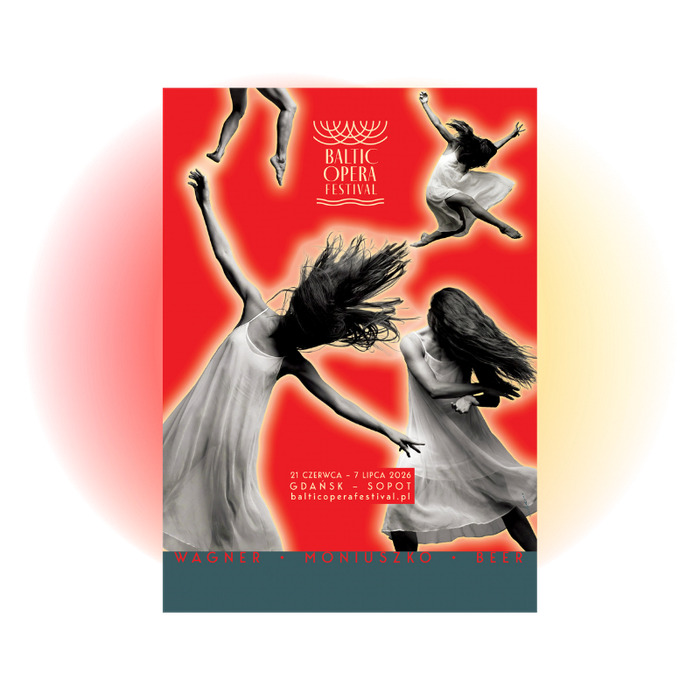
Museum of Man – Penderecki in memoriam
Opera Bałtycka w Gdańsku
Performers
Krakow Opera Ballet
Michał Klauza – conductor
Sinfonietta Cracovia
Repertoire
Krzysztof Penderecki – Three Pieces in Old Style
Krzysztof Penderecki – Sinfonietta No. 2
Krzysztof Penderecki – Chaconne from the Polish Requiem
***
Dance performance by the Museum of Man to Krzysztof Penderecki’s Partita for harpsichord and string orchestra
About
The Museum of Man is a tribute to the memory of Krzysztof and Elżbieta Penderecki, who played a fundamental role in the history of Sinfonietta Cracovia. Their support had a significant influence on the city’s decision to grant patronage to the then-young orchestra in 1994. Krzysztof Penderecki’s music has repeatedly accompanied the ensemble at key moments in its artistic development, and the orchestra itself has been an important performer and interpreter of his works.
Elżbieta Penderecka, who passed away in October 2025, was a member of the Honorary Committee of the Baltic Opera Festival (BOF). Her support, as an outstanding promoter of musical life and patron of culture, was particularly valuable and motivating to the creators of the Baltic Opera Festival, encouraging them to consistently and uncompromisingly develop the largest opera event in this part of Europe.
In the 1980s, Marian Żak received permission from Krzysztof Penderecki to create a contemporary choreography for the Partita for Harpsichord and String Orchestra. It became part of the production “Museum of Man,” which premiered on April 12, 1986, at the Silesian Opera in Bytom and was very favorably received by the composer himself. The highlight of the evening on July 6 will be the premiere of a contemporary dance performance inspired by this work.
The concert “Museum of Man – Penderecki in Memoriam” is a tribute by both the Sinfonietta Cracovia orchestra, Marian Żak, and the Festival organizers to the legacy of the Penderecki family. The event will serve as a gesture of gratitude for the history they helped shape, and the evening’s program will showcase the multidimensionality of Maestro Krzysztof Penderecki’s musical language and his ongoing dialogue with tradition.
Tickets
Tickets available online
Patrons and partners


Directions
Al. Zwycięstwa 15
The Baltic Opera is located in Wrzeszcz, on the main transport route. It can be reached by tram, bus, SKM train, bicycle and car.
By tram or bus:
Lines: 2, 3, 4, 6, 7, 8, 9, 11, 12, 115, 283, N1, N4, N13
From the tram stop, head towards the pedestrian crossing in the direction of Hallera Street. After crossing, turn right, then walk to the end of the Opera House building and turn left – the entrance to the building is on the left-hand side.
From the bus stop (for buses heading towards Gdańsk Główny), walk to the tram stop and then follow the same route as described above.
From the bus stop (bus heading towards Wrzeszcz), turn right and walk along the Opera House building, then turn left; the entrance to the building is on the left.
By SKM train:
Gdańsk Politechnika station is located at the rear of the Opera House. Once you leave the platform, head along Trubadurów Street towards Zwycięstwa Avenue, then turn left and walk to the end of the Opera House building, then turn left again – the entrance to the building is on your left.
By bike:
There are two Mevo bike-share stations right next to the Opera House.
By car:
The Baltic Opera car park is reserved for artists, staff and people with disabilities.
The nearest car park for those arriving by car is located along Towarowa Street, between Hallera Street and Trubadurów Street, along Hallera Street.
Accessibility
Audio descriptions and sensory walks:
The Opera offers audio description for selected operas (including Puccini’s Madame Butterfly and Bizet’s Carmen), operettas (Kálmán’s The Csárdás Princess), ballets (including Minkus’s Don Quixote and Saint-Saëns’s The Carnival of the Animals) and educational activities (Pomposo and...), and is gradually expanding its range to include new titles. Most events with audio description are accompanied by a sensory walk, i.e. an introduction to the performance that allows you to get to know the work being staged and its production by experiencing its individual elements through your various senses.
Translations into Polish Sign Language:
The Opera’s programme includes events with interpretation into Polish Sign Language, either in the traditional format (e.g. selected sessions from the Opera? Si! series of stage talks) or through shadow interpreting, which involves integrating interpreters into the stage action (selected scenes from the children’s show Pomposo and…). The Artetematy family workshops also have educational value; several times a season we invite a Polish Sign Language interpreter to take part, who also acts as the workshop leader, teaching basic Polish Sign Language signs.
Cooperations and partnerships:
The Opera regularly collaborates with the DeFacto Association, a non-governmental organisation working to make cultural events accessible to blind people. Collaboration with the Polish Association of the Blind is also helpful in identifying needs and improving accessibility. The 'Window to the World' Foundation supports the Baltic Opera in making events accessible to deaf people. The Baltic Opera has also collaborated with the Gdańsk Foundation for Social Innovation, the Institute for Child Development Support and the ‘Different is Beautiful’ Association.
Available space:
Includes: tactile paving and Braille signs, as well as maps in Braille, which help blind and partially sighted people navigate the building; voice announcements via beacon devices; a toilet for people with disabilities; and a lift.
Other accessibility measures:
Include: an induction loop in the auditorium and in the ticket hall; noise-cancelling headphones for those sensitive to loud noises; a quiet room available on request; and specially designated seating in the auditorium for people with mobility impairments.


.png)
.png)

Stay updated
Listen to us on


